.svg)

The UK hospitality industry moves incredibly fast. Serving exceptional food and offering top-tier hospitality are still the foundation of any great eatery, but today, they are only half the battle. Restaurant owners across the country face intense competition, unpredictable high streets, and shifting consumer habits.
If you want to keep your dining room buzzing from Monday morning through to Sunday night, you need a dynamic marketing toolkit. Relying purely on passing trade or organic word of mouth is no longer a viable long-term business model.
To help you cut through the noise, we have put together 18 actionable restaurant marketing ideas and strategic pillars designed to boost your visibility, streamline your online ordering, and keep customers coming back for seconds.
The Digital Foundation: Dominating Local Search
Before you spend a single penny on complex promotions, you must make it effortless for hungry locals to find you online. When people searching for a dinner spot open their phones, your venue needs to be front and centre.
1. Claim and Perfect Your Google Business Profile
Your Google Business Profile is essentially your digital front door. When someone types "best restaurants in your area" or "local eateries" into a google search, this profile dictates whether you show up in the coveted local map pack. Ensure your address, phone number, and current opening hours are flawlessly accurate. Upload high-resolution photos of your signature dishes, your team, and your interior to set the mood before they even step inside.
2. Optimise for Hyper-Local Keywords
When potential diners look for specific cuisines online—such as "italian restaurants in Manchester" or "sushi London"—search engines scan web pages for local relevance. Embed these geographical keywords naturally into your website’s headings, meta descriptions, and blog posts to capture high-intent local traffic.
3. Keep Your Online Menu Accessible and Readable
Never make customers download a clunky PDF menu on a weak mobile data connection. It kills conversion rates. Keep your menu directly on your website in a clean, responsive HTML format. This not only improves user experience but also allows Google to crawl the text, meaning individual dishes can show up in search results when people look for specific plates nearby.
Social Media Mastery: Capturing the Visual Appetite
Food is inherently visual. Because of this, social media platforms are the ultimate playground for modern hospitality marketing.
4. Harness the Power of User-Generated Content
Your customers are your best marketeers. User-generated content (UGC)—such as Instagram Stories, grid posts, and TikTok videos filmed by your diners—carries far more authenticity than a polished corporate advert. Encourage guests to share their experiences by printing your social handles on menus, creating visually striking "Instagrammable" corners in your venue, or running tag-to-win competitions.
5. Run Targeted Paid Ads
Organic reach on social platforms is lower than ever. To get your dishes in front of the right eyeballs, implement hyper-local paid ads on Meta (Facebook and Instagram) or TikTok. You can use targeted marketing to pinpoint users within a specific radius of your postcode, focusing on demographics like age, interests (e.g., "foodies" or "craft beer lovers"), and even upcoming birthdays.
6. Lean Into Short-Form Video Content
Static images are great, but short, punchy video content is what social algorithms crave. Show behind-the-scenes glimpses of your kitchen prep, film a quick interview with your head chef discussing a new seasonal ingredient, or capture the satisfying pour of a sauce over a dessert. These brief clips build an emotional connection with your audience before they ever book a table.
Cultivating Loyalty and Direct Relationships
Getting a guest through the door once is a victory; turning them into a lifelong regular is where true profitability lies.
7. Launch a Structured Loyalty Program
A modern, digital loyalty program gives customers a tangible reason to choose your restaurant over a competitor. Move away from traditional cardboard stamp cards, which are easily lost, and integrate a digital rewards scheme into your POS system or a mobile app. Reward points not just for money spent, but for actions like ordering online, visiting during quieter periods, or referring a friend.
8. Grow and Segment Your Email List
An email list is one of the few marketing channels you truly own, free from the whims of third-party social algorithms. Gather email addresses via your table booking system, Wi-Fi login page, or website pop-ups. Use this data for targeted marketing campaigns—such as sending a personalised birthday voucher or inviting your most frequent diners to an exclusive menu preview night.
Example of an Effective Email Segmentation Strategy:
Infrequency Segment
- Target: Hasn't visited in 60+ days
- Offer: "We miss you" perk or complimentary drink on return
Loyal Regulars
- Target: Visits more than twice a month
- Offer: Early access to exclusive tasting menus & events
9. Build Community with Interactive SMS Marketing
While email is excellent for long-form newsletters and monthly updates, SMS boasts an incredibly high open rate. Use text message marketing sparingly for immediate, time-sensitive updates—like alerting locals that you have had a sudden table cancellation on a busy Friday night, or offering a flash discount on rainy mid-week afternoons.
Influencer and Community Collaboration
Building relationships outside your four walls can dramatically accelerate your brand awareness.
10. Partner with Micro-Food Bloggers
Do not waste your budget chasing macro-influencers with millions of generic followers. Instead, invite local food bloggers with smaller, highly engaged, hyper-regional audiences down for a complimentary meal. Their followers trust their genuine recommendations, which translates directly into reliable, local word of mouth recommendations.
11. Support Local Charity Initiatives
Community integration builds immense goodwill. Partner with a local charity or community project, perhaps by donating a percentage of profits from a specific menu item to a regional food bank or hosting a charity dinner. It establishes your restaurant as a core pillar of the local neighbourhood, giving people an altruistic reason to support your business.
12. Cross-Promote with Neighboring Businesses
If you run a casual lunch spot near a busy business park or a group of offices, drop by with a few boxes of pastries or menu samples for the office managers. Offer them an exclusive corporate discount code for their staff. This straightforward B2B outreach can rapidly secure a dedicated, high-volume lunchtime crowd.
Driving Footfall with Strategic Promotions
Discounts can degrade your brand value if used incorrectly, but clever, structured restaurant promotions can transform slow shifts into highly profitable ones.
13. Reimagining the Classic Happy Hour
A well-executed happy hour does not have to be a race to the bottom on price. Instead of just offering cheap drinks, focus on driving food sales during your quietest hours (typically 4 pm to 6 pm). Create bundled offers, such as a signature cocktail paired with two small plates for a set price, enticing professionals to drop in straight after finishing work.
14. Capitalise on Limited Time Offers (LTOs)
The fear of missing out is a powerful psychological motivator. Introduce limited time menu items or weekly specials that leverage seasonal British ingredients—like a wild garlic risotto in spring or a spiced plum dessert in autumn. Label them clearly as limited editions; the urgency encourages regulars to visit sooner rather than later to try the dish before it disappears.
15. Host Unique Ticketed Events
Transform your space into an experiential destination. Host wine or beer tasting dinners paired with a bespoke multi-course menu, hold live acoustic music nights, or run interactive masterclasses where guests learn how to roll their own pasta or shake cocktails. Ticketed events guarantee upfront revenue and draw in diners who may not have visited for a standard dinner reservation.
Streamlining Convenience and Off-Premise Revenue
The modern dining experience extends far beyond the physical walls of your dining room. Convenience is a massive selling point.
16. Own Your Online Ordering System
While third-party delivery apps like Deliveroo, UberEats, and JustEat are excellent for initial discovery, their hefty commission fees can decimate your margins. Invest heavily in building an easy-to-use, direct online ordering portal on your own website. Offer small incentives for customers who order directly from you—such as a free side dish or loyalty points—to transition them away from third-party apps.
17. Package High-Quality At-Home Meal Kits
Building on the shift toward premium home dining, consider packaging your most popular, travel-friendly dishes into high-end meal kits. Whether it is a DIY burger kit or a curated feast for a special weekend at home, meal kits allow you to generate extra revenue and reach customers far outside your immediate physical delivery radius.
18. Leverage Striking Vehicle and Exterior Branding
If you operate your own delivery drivers or run a catering van, treat your vehicles as mobile billboards. High-quality, clean, professionally designed vehicle wraps featuring your branding, web address, and a compelling tagline ensure your restaurant remains top of mind every single time your drivers cruise through the local community.
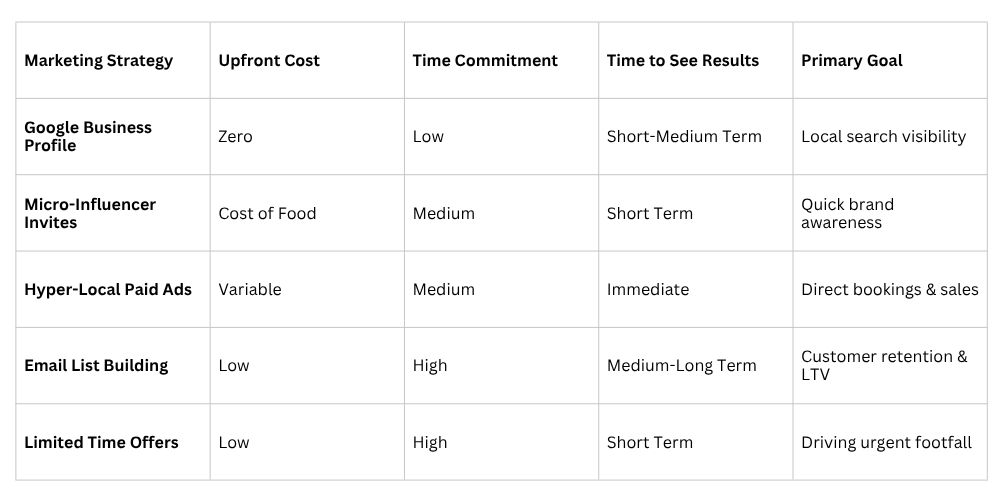
Marketing Strategy Comparison Matrix
To help you decide where to invest your time and budget first, let’s look at how these core strategies stack up against each other regarding investment level and speed of return:
Final Thought: Consistency Over Intensity
As a final thought, remember that successful restaurant marketing is rarely about executing one massive, expensive campaign and expecting it to solve your problems forever. It is about building a consistent, sustainable ecosystem of small habits.
Start by locking down your digital foundations—ensure your Google Business Profile is flawless and your online menu is fully responsive. From there, select two or three strategies that genuinely fit your brand identity and your team's capacity, whether that is nurturing an email list, collaborating with local food bloggers, or launching a digital loyalty program.
Track your metrics closely, listen to feedback from your diners, and refine your approach over time. By combining excellent food with clever, consistent marketing, you will build an enduring brand that keeps your tables booked and your kitchen bustling for years to come.
Track Your Progress
Before moving on, look over your current setup and tick off these quick wins:
- Is your Google Business Profile updated with summer/winter bank holiday hours?
- Can a customer view your full food menu on a mobile phone without downloading a PDF?
- Do you have a direct link for online ordering prominently displayed on your Instagram bio?
For almost 20 years, 3S POS has offered one of the most flexible EPOS systems to international brands such as Caffe Concerto, Maroush, Comptoir Libanais, Pepe’s Piri Piri, GDK and thousands more delighted customers.
If you are looking for an EPOS system for restaurants that will not just help you accept payments but includes inventory management, loyalty programs, and much more, speak to our sales for a free demo.