.svg)
Running a successful pub or bar in today’s economic climate is a demanding balance. With rising supplier bills, shifting consumer habits, and increasing operational costs across the UK hospitality industry, venue managers cannot afford operational friction. From managing crowded bars on Friday nights to controlling beverage yields, your point-of-sale platform sits at the very heart of your business operations.
Modern epos systems have evolved far beyond basic electronic cash registers. Today’s purpose-built epos for pubs and bars acts as a central hub, connecting front-of-house service directly to stock rooms, kitchen lines, and financial reporting dashboards.
Whether you run a lively high-street bar, a traditional community free house, or a bustling gastropub serving hundreds of covers a day, choosing the right system is vital for driving efficiency and protecting your profit margins. This guide explores everything you need to know about choosing the best epos system for pubs, comparing features, costs, and key functionality.
The Evolving Needs of the Modern Pub and Bar
The hospitality landscape has changed dramatically in recent years. According to industry data from UKHospitality, hospitality remains one of the UK’s largest private-sector employers, yet operators face ongoing margin pressures from food inflation and energy tariffs. As a result, pub owners are increasingly turning to technology to streamline their venues and protect profitability.
A generic retail till system simply cannot keep up with the fast-paced demands of a pub and bar environment. Bar staff require high-speed order processing to prevent queues from forming during peak rushes. Back-of-house teams need precise stock control tools to prevent spirit spillage, draught beer wastage, and inventory variance.
Moreover, as pubs expand their offerings—combining drinks service with Sunday roasts, outdoor gardens, and table bookings—having a fully integrated cloud based system becomes essential.
Key Features to Look For in a Pub & Bar EPOS System
When evaluating modern pos systems, it is important to separate basic sales features from deep, hospitality-specific tools. Here are the core capabilities every operator should look for:
Fast Order Entry and Custom Tills
During peak trading hours, every second spent tapping a screen creates a bottleneck at the bar. A user friendly interface with customisable layout grids, speed keys for popular draughts, and fast modifier prompts ensures your bar team can ring up orders effortlessly.
Advanced Stock and Yield Management
Beverage margins live and die by inventory control. A robust stock management solution allows management to track inventory down to the exact millilitre. By comparing theoretical stock usage against actual sales, managers can instantly spot pour variances, unrecorded line cleans, or missing stock.
Integrated Table Management and Tab Tracking
For food-led pubs and gastropubs, managing floor plans is critical. An integrated table management system lets staff open tabs, transfer bills between tables or bar seats, and handle complex requests like splitting bills evenly or by individual item without disrupting service flow.
Kitchen Workflow Integration
If your venue serves food, your front-of-house tills must communicate seamlessly with your kitchen line. Replacing paper tickets with an enterprise kitchen display system ensures food orders are routed to prep stations instantly, reducing ticket times and improving guest satisfaction.
Comparing EPOS Approaches: Fixed Terminals vs. Mobile Tills
When reviewing epos systems for pubs, operators generally choose between two primary setup formats: traditional heavy-duty terminals or tablet-based mobile systems.
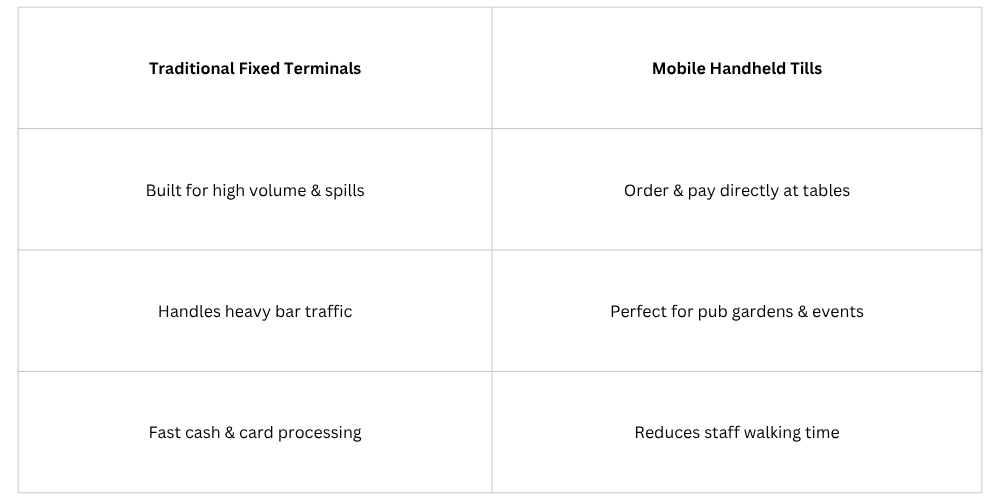
For most busy venues, a hybrid setup delivers the best of both worlds:
- Fixed Bar Terminals: Sturdy, spill-resistant hardware located behind the main counter handles fast-paced drink transactions during busy weekend rushes.
- Mobile Ordering Handhelds: Wireless handheld devices allow floor staff to take orders and accept payments directly at outdoor tables or dining booths. This eliminates double handling and speeds up table turnover.
What Should a Good Pub EPOS System Have?
Selecting the right system requires looking at how well the pub EPOS software features align with daily pub operations. A truly effective epos system for pubs should include the following core capabilities:
1. Real-Time Analytics and Reporting
You cannot manage what you do not measure. A modern platform provides real time reporting accessible from any device. Business owners should be able to track sales per hour, identify top-performing staff members, monitor food vs. drink revenue splits, and view gross profit margins instantly.
2. Built-in Staff Management
Managing shifts and wage costs is a major challenge for operators. Integrated staff management features allow venue managers to handle clock-ins directly on the till screen, track employee hours, control discount permissions, and analyse individual sales performance to optimise rota planning.
3. Multi-Channel Payment Processing
Modern drinkers expect flexible payment choices. Your till hardware should support contactless payments, mobile wallets (Apple Pay, Google Pay), split payments, and integrated chip-and-pin card terminals to ensure speedy transaction settlements.
4. Seamless Offline Mode
Internet connections can drop during bad weather or local outages. A reliable pub system must include a local offline mode that allows staff to continue taking orders, printing receipts, and serving drinks without losing data when the network drops out.
5. Multi-Site Management Capabilities
If you manage a pub group or franchise, centralised control is vital. Your EPOS software should allow you to update drink prices, change menu layouts, and run consolidated financial reports across multiple venues from a single cloud dashboard. To learn how larger operators handle complex multi-site logistics, read our article on solving multi-site restaurant inventory lag via EPOS.
How Much Does a POS System Cost for a Bar?
Understanding the total cost of ownership for a pub and bar system requires looking beyond initial headline prices. POS pricing generally falls into three components: hardware, software subscriptions, and payment processing fees.
Hardware Costs
Hardware costs depend on the size and layout of your venue:
- Single Terminal Setup: A basic counter terminal with a receipt printer and cash drawer typically ranges between £600 and £1,200 upfront.
- Multi-Station Setup: A multi-bar venue requiring several fixed terminals, handheld ordering tablets, and kitchen printers usually ranges from £2,000 to £5,000+, depending on specification and build quality.
Software Subscriptions
Cloud software fees are typically billed on a monthly per-terminal basis:
- Entry-level SaaS packages start from roughly £30 to £60 per month per terminal.
- Enterprise-grade hospitality platforms offering advanced inventory tracking, recipe costing, and multi-site analytics typically cost between £70 and £150 per month per location.
Transaction and Processing Fees
Processing fees vary significantly depending on provider models:
- Flat-Rate Providers (e.g., Square for Restaurants): Charge a fixed percentage per card transaction (often between 1.2% and 1.75% for in-person payments). While easy to understand, flat rates can become expensive for high-volume venues processing tens of thousands of pounds monthly.
- Interchange-Plus Pricing: Enterprise hospitality providers like 3S POS integrate with competitive merchant services that offer custom interchange-plus rates. For high-volume pubs, securing lower transaction fees saves thousands of pounds annually on merchant processing.
Why Purpose-Built Hospitality Software Beats Entry-Level Tills
While entry-level retail apps or simple payment readers like Square for restaurants work well for small coffee shops or pop-up stalls, growing pubs often outgrow them.
Busy bars require deep operational tools:
- Complex Recipe Costing: Tracking raw spirit volume, cocktail mix ratios, and draft keg yields requiring true ingredient-level stock control.
- Promotional Logic: Automatically applying happy hour discounts, meal deals, or multi-buy drink offers without relying on manual staff adjustments.
- Hardware Durability: Commercial-grade, IP-rated touchscreens designed to withstand accidental liquid spills and continuous heavy use behind a high-volume bar.
Investing in a robust, purpose-built platform ensures your business can scale without experiencing technological slowdowns during your busiest trading periods.
Transform Your Pub Operations with 3S POS
Navigating the complexities of the hospitality industry requires hardware and software built specifically for demanding bar environments. Relying on slow, disconnected tills frustrates staff, creates long queues, and damages your bottom line.
Partnering with 3S POS gives your pub, wine bar, or hospitality group an enterprise-grade solution engineered for performance. Our ecosystem seamlessly links front-of-house EPOS Till Systems with live stock management, table ordering, and kitchen routing.
With 3S POS, you gain real-time visibility over yields, streamline peak-hour service, and protect your profit margins with total confidence.
Ready to upgrade your pub’s EPOS system and boost bar efficiency? Contact the enterprise team at 3S POS today to book a tailored, no-obligation system demo.